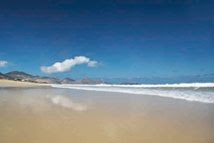
On Carcavelos Beach you´ll find a little bit of Portugal, especially around the Estoril Coast. We will give you information on where to go, what to see, our history, our traditions, invite to visit our museums and monuments, atend our cultural and Sport events. We will give you our famous recipes from our fantastic gastronomy, and know and then we will share a little bit of our favorite things. We hope you’ll enjoy the journey. Thank you and welcome to Carcavelos Beach.
Showing posts with label HISTORY. Show all posts

Inês de Castro: The Queen Who Was Crowned After Death

"Agora é tarde; Inês é morta" (“It’s too late; Inês is dead”) is a Portuguese saying used in everyday life. By continuing to use it more than 550 years after Inês' death, people still evoke one of the most tragic heroines of all time, whose story is rooted not only in Portuguese history and language but also in universal myth and fable.

Inês Pérez de Castro (ca. 1320-1355) was the daughter of the powerful Pedro Fernandes de Castro, an illegitimate grandson of King Sancho IV of Castile. She arrived in Portugal in 1340 as a lady-in-waiting to her cousin, Infanta Constança of Castile, who was to marry the heir to the Portuguese throne, Dom Pedro (son of King Dom Afonso IV). But immediately the crown prince set his eyes on Inês' “heron neck," he was in love with the noble lady. Even though he married the Castilian Infanta in 1340, he began to neglect his lawful wife and focussed his attention on Inês. The die was cast, and an irresistible love story was about to be written. Pedro was madly in love, and legend even says that he used to send his love letters through a pipe that carried water from the estate of Quinta do Pombal* to the Monastery of Santa Clara-a-Velha, where the beautiful lady was settled.

In a cunning manoeuvre aimed at putting an end to her husband’s love affair, Constança invited Inês to be the godmother of her newly born son, Infante Dom Luís (who was born on 27 February 1340 and lived for just a few weeks), as in the eyes of the Catholic Church, this would make Inês a member of the family and would render her affair with Dom Pedro incestuous. However, the Princess' scheme did not have the desired effect; despite her efforts, as well as the King's later attempts to separate the lovers (by banishing Inês from Court and sending her back to Castile in 1344), the feelings of the couple for each other did not subside, and Pedro continued to visit Inês when she was away from the kingdom. Dona Constança, on the other hand, did not have long to live. She died on 13 November 1345, shortly after giving birth to her third child, Infante Dom Fernando (born on 31 October).

Once he was no longer married, Dom Pedro went after Inês, brought her back to Portugal and settled her in Coimbra, where they would live together openly. The lovers were closer than ever, and they went on to have four children: Afonso (who died in infancy), Beatriz (born around 1347), João (born in 1349), and Dinis (born in 1354). Meanwhile, the Prince became increasingly close to Inês' brothers (Álvaro and Fernando de Castro), who tried to convince him to claim the throne of Castile, thus endangering the already fragile relations between Portugal and that neighbouring kingdom. Soon the Prince (also a grandson of King Sancho IV of Castile) was persuaded by their arguments and declared himself a pretender to the thrones of León and Castile, taking advantage of the weak position of his cousin, Pedro of Castile, due to the intrigues created by the bastards of Alfonso XI.

It became evident to the Portuguese King and aristocracy that the Castro clan would end up dragging the future monarch and his kingdom into the dynastic fights of their neighbours. Moreover, Dom Afonso IV and his courtiers secretly feared that at some time in the future Inês' sons would impugn the legitimacy of Infante Dom Fernando (the surviving son of Pedro and Constança), causing a civil war. Even worse, they were concerned that the Castros might make an attempt on the life of this frail little heir.

These fearsome prospects led the King and his advisers to look for ways to free the Prince from the damaging influence of the Castro clan, and the death of Inês started to be seen as a solution. Initially, Dom Afonso IV was reluctant to agree to such an extreme action against the mother of his grandchildren, but on 7 January 1355 (while Pedro was away from home), the King called his counsellors to a meeting in the Castle of Montemor-o-Velho, at the end of which he finally decided to send three of his courtiers - Pêro Coelho, Álvaro Gonçalves and Diogo Lopes Pacheco - to Coimbra, in order to kill Inês.

According to Cristóvão Rodrigues Acenheiro's Chronicles – which would inspire poets and novelists throughout history – as soon as they arrived, Inês appeared surrounded by her children and appealed to the Dom Afonso IV, who was thus struggling between the needs of the state and his feelings as a grandparent. Finally, he left the room, saying to the counsellors: "Do whatever you want". As soon as the King had turned his back, the sentence was carried out: Inês de Castro was executed.

Although the assassination took place in Santa Clara-a-Velha (where the couple had been living together since Constança’s death), the myth associates Inês' tragedy with the Quinta das Lágrimas [Estate of Tears], and people believe that her blood still stains the red stone-bed of the spring on this estate, where she is said to have cried out for the last time, while being pierced by the daggers of the executioners.

Queen after Death

When Dom Pedro heard that Inês had been killed, the terrible news drove him into a fury. Knowing that his father had ordered the killing, Dom Pedro staged a revolt against the King. For several months, with the support of the Castro brothers, his troops swept through the country and laid siege to the city of Porto. Finally, the Queen intervened to end the revolt and bring about a reconciliation between father and son, who formally promised to forgive the incident. But two years later, Dom Afonso IV died and Dom Pedro succeeded to the Portuguese throne. As soon as he was crowned in 1357, and in spite of his promises of forgiveness, King Dom Pedro I recovered two of Inês' assassins from Castile, where they had sought refuge (the third had escaped to France). He then had them tortured and executed in a barbaric but highly symbolic way: from one of the men who had killed the love of his life, the heart was ripped out of the body through his back, and from the other, the heart was pulled out through the chest. All this happened in front of the Royal Palace, where the King was able to watch the terrible scene while having dinner!

In spite of being based on medieval concepts of justice, such infamous cruelty would give the King the nickname of Pedro the Cruel. Nevertheless, according to the 1891 Hispanic-American Encyclopedia, his entire reign was evidence of his sweet and benevolent character. Of all three Pedros who were reigning in Hispania (Castile, Aragon and Portugal) at the time - all three known by the nickname the Cruel - the Portuguese king was the one who least deserved it. He protected the people and curbed the excesses of the nobility, and so nobles and clergymen nicknamed him the Cruel, while the folks remembered him rather as the Just.

Either way, Pedro's eagerness for justice was great and the painful memories were asking to be avenged. On 12 June 1360, the King announced in Cantanhede that, some years earlier, he had secretly married Inês, in the town of Bragança. The bishop of Guarda, Dom Gil, and one of his servants, Estêvão Lobato, were presented as witnesses of the wedding - although nobody seemed to remember the date when it had taken place. Nevertheless, Inês de Castro was declared Dom Pedro's legitimate wife and therefore the lawful Queen of Portugal. The King then ordered her body to be exhumed and taken from the Monastery of Santa Clara in Coimbra to the Monastery of Alcobaça (the tomb of kings), where she was buried in an extraordinary ceremony, on 2 April 1361.

Chronicler Fernão Lopes (ca. 1378-1459) described it thus: "D. Pedro ordered a tomb of white marble, finely surmounted by her crowned statue, as if she was a Queen; and then he caused the tomb to be placed in the Monastery of Alcobaça [...] and made the corpse come from the Monastery of Santa Clara of Coimbra, escorted by many horses and noblemen and maids and clergymen. And all the way through, a thousand men were holding candles, in such a way that always the body was enlightened; and thus it arrived at the Monastery, which was seventeen thousand leagues away from Coimbra, where the body was buried with many religious services and great solemnity. And it was the most magnificent translation ever seen in Portugal". The extraordinary splendour of this unique ceremony was so impressive that Heinrich Schöffer (Historia de Portugal, ed. 1893) described the scene with a memorable metaphor: "Inês de Castro was led to Alcobaça between two lines of stars".

Afterwards, the accounts of Pedro's actions mix reality with legend. Some say that the tomb was placed opposite Pedro's own grave, so that they could look into each other’s eyes on the day of the last judgment. Others go even further and say that, once in Alcobaça, Pedro had Inês placed on the throne, put the royal crown on the skull, and forced the entire court to swear allegiance to the dead Queen, by kissing the hand of the corpse. One thing is known for sure: the eighth King of Portugal was moved by strong feelings that united him to the queen of his heart and, according to the royal chronicler Fernão Lopes, he was consumed by a "great madness".

Thus, their love story turned into a myth. “The Queen who was crowned after death" seems not to have died in vain; if not to keep the future of Portugal as graceful as her executioners wanted, at least so that, by dying, she could become the finest representation of the Portuguese "saudade"... that mysterious longing for something that is unfinished and might return in the future. By an ironic fancy of Destiny, Constança's son (Dom Fernando) would be the last king of the First Dynasty, while the heir of the new king, Dom Duarte, would marry, in 1428, to Dona Leonor of Aragon, herself a great-granddaughter of Inês de Castro... After everything, all the kings from the glorious Dynasty of the Discoveries descend from her!

Inês has taken hold of our souls. The royal mistress took leave of her life to become an eternal muse. Nothing is so incorruptible as her death.


EQUATOR by Miguel Sousa Tavares

It is Lisbon in the year 1905 and our hero, Luis Bernardo Valenca, a 37-year-old bachelor and owner of a small shipping business, is revelling in the luxury of Lisbon's high society. Intellectually curious, he writes about politics in his spare time, believing that Portugal's vast empire is having a civilising effect on the far-off lands it has colonised.

But his life is turned upside down when King Dom Carlos asks him to become governor of Portugal's smallest colony, the tiny island of Sao Tome e Principe, stuck out in the Atlantic off the coast of equatorial West Africa, whose economy rests almost entirely on its cocoa plantations.

However, the English believe that slavery still exists illegally in Sao Tome and intend to send a diplomatic envoy to check it out. (Of course the English, with their rival cocoa plantations in Africa, have their own reasons for trying to prevent the export of cocoa from Sao Tome).

As a gentleman used to a softer urban life, Luis Bernardo is ill-prepared for the challenges of plantation life, and he is shocked by the conditions under which the Angolan workers labour - although he is more than willing to engage romantically with the wife of the English consul, one of several candidates for his attentions.

"Equator "is a compelling and constantly surprising novel, casting light on a little-known corner of colonial life. Epic in scope, laced with emotional and moral complexity, "Equator" brings this simmering tropical community to life through the entanglements and betrayals of its cast of unforgettable characters. A best-seller in Portugal, and sold in many languages, "Equator" will also amaze and delights its English readers.

Product Details

  • Hardcover: 384 pages
  • Publisher: Bloomsbury Publishing PLC (July 7, 2008)
  • ISBN-10: 0747581746
  • ISBN-13: 978-0747581741
  • Product Dimensions: 9.3 x 6.1 x 1.5 inches
  • Translator: Peter Bush

The "Travesseiros da Piriquita" a delicacy.

The "Travesseiros da Piriquita" (The pillows of Piriquita) are the best ambassadors of Portugal, bringing the flavors of Sintra to the four corners of the world.

Meet the woman who over the past 50 years is the keeper of the secret of this delicacy. Leonor Cunha is the iron lady in front of a sweet deal, since 1862 remains in the female hands.

They are sold by the thousands every week-end. Some people walk dozens of miles and come on purpose to Sintra. Then you forget the cholesterol and additional pounds and .... you delight yourself with them.

The pillows of Piriquita have a long family tradition behind. Represent one of the most profitable business of the county and always with a woman at the helm: In the XIXth century began with Constance Gomes Periquita and two centuries later, Leonor Cunha, a 74 years old, leads with an iron hand. a business which always remained in the family.

"In 1862 it was founded by my great-grandmother's husband, Mrs. Constance Gomes Piriquita. Since them was always in the family and always with a woman in front: then went to Mrs. Nazareth, grandmother of my husband, was followed by her daughter (mother of my husband) Constance Cunha and now I want to move the rudder to my granddaughter. We are in the sixth generation. Clearly, a business made by women. I feel a great pride". - says Mrs. Leonor Cunha.

Our advice: You can´t miss this delicacy. After you tried it you will cry for more

SINTRA

Sintra is situated in the north side of Serra of Sintra and offers numerous sights to visitors. Even the Portuguese kings had their summer residence there. You can find enchanted villas, gardens with rampant plants, fairy-tale castles in the middle of green mountain slopes. This recreational area isn't only popular for tourists but also for inhabitants of Lisbon. Long streams of cars from Lisbon are formed particularly on weekends. Hans Christian Andersen described Sintra as "the most beautiful place of Portugal".

The old town of Sintra is dominated by the Palácio Nacional de Sintra, which can be seen from far away at its gigantic conical chimneys. In the course of the centuries this popular summer residence of the kings got several rebuilding and modifications, so that today it consists of a mixture of different architectural styles. The Sala dos Brasões and Sala dos Cisnes are particularly remarkable.
Wander through the lanes of the place and have a look in the souvenir shops. Send a postcard from the beautiful tiled post-office.

1755 Lisbon earthquake

The 1755 Lisbon earthquake, also known as the Great Lisbon Earthquake, took place on November 1, 1755, at around 9:40 in the morning. The earthquake was followed by a tsunami and fires, which caused near-total destruction of Lisbon in Portugal, and adjoining areas. Geologists today estimate the Lisbon earthquake approached magnitude 9 on the Richter scale, with an epicenter in the Atlantic Ocean about 200 km (120 mi) west-southwest of Cape St. Vincent. Estimates place the death toll in Lisbon alone between 10,000 and 100,000 people, making it one of the most destructive earthquakes in history. The earthquake accentuated political tensions in Portugal and profoundly disrupted the country's eighteenth-century colonial ambitions. The event was widely discussed and dwelt upon by European Enlightenment philosophers, and inspired major developments in theodicy and in the philosophy of the sublime. As the first earthquake studied scientifically for its effects over a large area, it led to the birth of modern seismology and earthquake engineering.

The earthquake and tsunami


The Azores-Gibraltar Transform Fault which marks the boundary between the African (Nubian) and the Eurasian continental plates runs westward from Gibraltar into the Atlantic. It shows a complex and active tectonic behavior, and is responsible for several important earthquakes that hit Lisbon before November 1755: eight in the 14th century, five in the 16th century (including the 1531 earthquake that destroyed 1,500 houses, and the 1597 earthquake when three streets vanished), and three in the 17th century. During the 18th century,
earthquakes were reported in 1724 and 1750.

In 1755, the earthquake struck on the morning of 1 November, the Catholic holiday of All Saints' Day. Contemporary reports state that the earthquake lasted between three-and-a-half and six minutes, causing gigantic fissures five-metres (15 ft) wide to appear in the city centre. Survivors rushed to the open space of the docks for safety and watched as the water receded, revealing a sea floor littered by lost cargo and old shipwrecks. Approximately forty minutes after the earthquake, an enormous tsunami engulfed the harbour and downtown, rushing up the Tagus river, "so fast that several people riding on horseback ... were forced to gallop as fast as possible to the upper grounds for fear of being carried away". It was followed by two more waves. In the areas unaffected by the tsunami, fire quickly br
oke out, and flames raged for five days.

Lisbon was by far not the only Portuguese city affected by the catastrophe. Throughout the south of the country, in particular the Algarve, destruction was rampant. A tsunami destroyed some coastal fortresses in the Algarve and, in the lower levels, razed several houses. Almost all the coastal towns and villages of the Algarve were heavily damaged, except Faro, which was protected by the sandy banks of Ria Formosa. In Lagos, the waves reached the top of the city walls. Other towns of different Portuguese regions, like Peniche, Cascais, and even Covilhã which is located near the Serra da Estrela mountain range in central inland Portugal, were affected. The shock waves of the earthquake destroyed part of Covilhã's castle walls and its large towers. On the island of Madeira, Funchal and many smaller settlements suffered significant damage. Almost all of the ports in the Azores archipelago suffered most of their destruction from the tsunami, with the sea penetrating about 150 m inland.

Shocks from the earthquake were felt throughout Europe as far as Finland and North Africa, and according to some sources even in Greenland and in the Carribean. Tsunamis as tall as 20 metres (66 ft) swept the coast of North Africa, and struck Martinique and Barbados across the Atlantic. A three-metre (ten-foot) tsunami hit Cornwall on the southern English coast. Galway, on the west coast of Ireland, was
also hit, resulting in partial destruction of the "Spanish Arch" section of the city wall.

Although seismologists and geologists had always agreed that the epicenter was in the Atlantic to the West of the Iberian peninsula, its exact location has been a subject of considerable debate. Early theories had propsed the Gorringe Ridge until simulations showed that a source closer to the shore of Portugal was required to comply with the observed effects of the tsunami. A seismic reflection survey of the ocean floor along the Azores-Gibraltar fault has revealed a 50 km-long thrust structure Southwest of Cape St. Vincent, with a dip-slip throw of more than 1 km, that might have been created by the primary tectonic event.

Economic and cultural impact

Economic historian Alvaro Pereira estima
ted that of Lisbon's population of approximately 200,000 people, some 30,000-40,000 were killed. Another 10,000 may have lost their lives in Morocco, although local reports are vague and damage reports relating to the November 1 event are difficult to separate from those of another series of local earthquakes that occurred on Nov. 18-19. The total death toll in Portugal, Spain and Morocco from the earthquake and the resulting fires and tsunami was estimated at 40,000 to 50,000 people.
Eighty-five percent of Lisbon's buildings were destroyed, including famous palaces and libraries, as well as most examples of Portugal's distinctive 16th-cent
ury Manueline architecture. Several buildings that had suffered little earthquake damage were destroyed by the subsequent fire. The new Opera House, opened just six months before (named the Phoenix Opera), burned to the ground. The Royal Ribeira Palace, which stood just beside the Tagus river in the modern square of Terreiro do Paço, was destroyed by the earthquake and tsunami. Inside, the 70,000-volume royal library as well as hundreds of works of art, including paintings by Titian, Rubens, and Correggio, were lost. The royal archives disappeared together with detailed historical records of explorations by Vasco da Gama and other early navigators. The earthquake also damaged major churches in Lisbon, namely the Lisbon Cathedral, the Basilicas of São Paulo, Santa Catarina, São Vicente de Fora, and the Misericordia Church. The Royal Hospital of All Saints (the largest public hospital at the time) in the Rossio square was consumed by fire and hundreds of patients burned to death. The tomb of national hero Nuno Álvares Pereira was also lost. Visitors to Lisbon may still walk the ruins of the Carmo Convent, which were preserved to remind Lisboners of the destruction.

Relief and reconstruction efforts


The royal family escaped unharmed from the catastrophe; King Joseph I of Portugal and the court had left the city, after attending mass at sunrise, fulfilling the wish of one of the king's daughters to spend the holiday away from Lisbon. After the catastrophe, Joseph I developed a fear of living within walls, and the court was accommodated in a huge complex of tents and pavilions in the hills of Ajuda, then on the outskirts of Lisbon. The king's claustrophobia never waned, and it was only after Josep
h's death that his daughter Maria I of Portugal began building the royal Ajuda Palace, which still stands on the site of the old tented camp. Like the king, the prime minister Sebastião de Melo (the Marquis of Pombal) survived the earthquake. When asked what was to be done, Pombal reportedly replied "Bury the dead and heal the living," and set upon organizing relief and rehabilitation efforts. Firefighters were sent to extinguish the raging flames, and teams of workers and ordinary citizens were ordered to remove the thousands of corpses before disease could spread. Contrary to custom and against the wishes of the Church, many corpses were loaded onto barges and buried at sea beyond the mouth of the Tagus. To prevent disorder in the ruined city, the Portuguese Army was deployed and gallows were constructed at high points around the city to deter looters; more than thirty people were publicly executed. The Army prevented many able-bodied citizens from fleeing, pressing them into relief and reconstruction work. The king and the prime minister immediately launched efforts to rebuild the city, hiring architects, engineers and organizing labor. In less than a year, the city was cleared of debris. Keen to have a new and perfectly ordained city, the king commissioned the construction of big squares, rectilinear, large avenues and widened streets — the new mottos of Lisbon. When the Marquis of Pombal was asked about the need for such wide streets, he is said to have replied: "one day they will be small." The Pombaline buildings are among the first seismically-protected constructions in the world. Small wooden models were built for testing, and earthquakes were simulated by marching troops around them. Lisbon's "new" downtown, known today as the Pombaline Downtown (Baixa Pombalina), is one of the city's famed attractions. Sections of other Portuguese cities, like the Vila Real de Santo António in Algarve, were also rebuilt along Pombaline principles. The Casa Pia, a Portuguese institution founded by Mary I, known as "Pia" (Pious, in English), and organized by Police Intendant Pina Manique in 1780, was founded following the social disarray of the 1755 Lisbon earthquake.

Effect on society and philosophy

The earthquake had wide-ranging effects on the lives of the populace and intelligentsia. The earthquake had struck on an important church holiday and had destroyed almost every important church in the city, causing anxiety and confusion amongst the citizens of a staunch and devout Roman Catholic city and country, which had been a major patron of the Church. Theologians and philosophers would focus and speculate on the religious cause and message, seeing the earthquake as a manifestation of the anger of God. Some people thought the earthquake was a punishment for the massacre of thousands of unarmed natives and missionaries killed in South America (especially Paraguay). This massacre was ordered by the king of Portugal and carried out by Portuguese armies in 1754-1755.

The earthquake and its fallout strongly influenced the intelligentsia of the European Age of Enlightenment. The noted writer-philosopher Voltaire used the earthquake in Candide and in his Poème sur le désastre de Lisbonne ("Poem on the Lisbon disaster"). Voltaire's Candide attacks the notion that all is for the best in this, "the best of all possible worlds", a world closely supervised by a benevolent deity. The Lisbon disaster provided a salutary counterexample. As Theodor Adorno wrote, " The earthquake of Lisbon sufficed to cure Voltaire of the theodicy of Leibniz" (Negative Dialectics 361). In the later twentieth century, following Adorno, the 1755 earthquake has sometimes been compared to the Holocaust as a catastrophe that transformed European culture and philosophy. Jean-Jacques Rousseau was also influenced by the devastation following the earthquake, whose severity he believed was due to too many people living within the close quarters of the city. Rousseau used the earthquake as an argument against cities as part of his desire for a more naturalistic way of life.

The concept of the sublime, though it existed before 1755, was developed in philosophy and elevated to greater importance by Immanuel Kant, in part as a result of his attempts to comprehend the enormity of the Lisbon quake and tsunami. Kant published three separate texts on the Lisbon earthquake. The young Kant, fascinated with the earthquake, collected all the information available to him in news pamphlets, and used it to formulate a theory of the causes of earthquakes. Kant's theory, which involved the shifting of huge subterranean caverns filled with hot gases, was (though ultimately shown to be false) one of the first systematic modern attempts to explain earthquakes by positing natural, rather than supernatural, causes. According to Walter Benjamin, Kant's slim early book on the earthquake "probably represents the beginnings of scientific geography in Germany. And certainly the beginnings of seismology."

Werner Hamacher has claimed that the earthquake's consequences extended into the vocabulary of philosophy, making the common metaphor of firm "grounding" for philosophers' arguments shaky and uncertain: "Under the impression exerted by the Lisbon earthquake, which touched the European mind in one [of] its more sensitive epochs, the metaphor of ground and tremor completely lost their apparent innocence; they were no longer merely figures of speech" (263). Hamacher claims that the foundational certainty of Descartes' philosophy began to shake following the Lisbon earthquake.

The earthquake had a major impact on Portuguese politics. The prime minister was the favorite of the king, but the aristocracy despised him as an upstart son of a country squire (although the Prime Minister Sebastião de Melo is known today as Marquis of Pombal, the title was only granted in 1770, fifteen years after the earthquake). The prime minister in turn disliked the old nobles, whom he considered corrupt and incapable of practical action. Before November 1, 1755 there was a constant struggle for power and royal favor, but the competent response of the Marquis of Pombal effectively severed the power of the old aristocratic factions. However, silent opposition and resentment of King Joseph I began to rise, which would culminate with the attempted assassination of the king, and the subsequent elimination of the powerful Duke of Aveiro and the Távora family.

Development of Seismology

The prime minister's response was not limited to the practicalities of reconstruction. He ordered a query sent to all parishes of the country regarding the earthquake and its effects. Questions included:

* how long did the earthquake last?
* how many aftershocks were felt?
* what kind of damage was caused?
* did animals behave strangely?
* what happened in wells and water holes?

The answers to these and other questions are still archived in the Torre do Tombo, the national historical archive. Studying and cross-referencing the priests' accounts, modern scientists were able to reconstruct the event from a scientific perspective. Without the query designed by the Marquis of Pombal, this would have been impossible. Because the marquis was the first to attempt an objective scientific description of the broad causes and consequences of an earthquake, he is regarded as a forerunner of modern seismological scientists.

The geological causes of this earthquake and the seismic activity in the region continue to be discussed and debated by contemporary scientists.


CASCAIS

Cascais is a coastal town 30 kilometres west of Lisbon, with about 35,000 residents in the town. It is a cosmopolitan suburb of the Portuguese capital and one of the richest municipalities in Portugal. The former fishing village gained fame as a resort for Portugal's royal family in the late 1800s and early 1900s. Nowadays it is a popular vacation spot for both Portuguese and foreign tourists. Cascais is also a municipality with over 180,000 inhabitants. It is located in the Estoril Coast (named after Estoril, a civil parish), in Greater Lisbon subregion.It has an airport for general aviation serving the Lisbon Region in Tires (S. Domingos de Rana), "Aeroporto Municipal de Cascais".

The coastal settlement of Cascais originated in the 12th century, depending administratively on the town of Sintra, located to the North. In its humble beginnings, Cascais lived from the products of the sea and land, but already in the 13th century its fish production served the capital Lisbon, located nearby. During the 14th century the population increased to the outside of the walls of its castle. Its prosperity led to the administrative independence from Sintra in 1364. The village and its surroundings were owned by a feudal lord; the most famous of them was João das Regras (died 1404), a lawyer and professor of the University of Lisbon that was involved in the ascension of John I to power as the first King of the House of Aviz.

Since the Middle Ages, Cascais lived from fishing, maritime commerce (it was a stop for ships sailing to Lisbon), and from agriculture, producing wine, olive oil, cereals and fruits. Due to its location close to the Tagus estuary, it was also seen as a strategic post in the defence of Lisbon. Around 1488, King John II built a small fortress in the village, located by the sea. This mediaeval fortress was not enough to repel the invasion, in 1580, of Spanish troo
ps led by the Duque of Alba, who took the village during the conflict that led to the union of the Portuguese and Spanish crowns. The fortress was enlarged towards the end of the 16th century by King Philip I (Philip II of Spain), turning it into a typical renaissance citadel with the characteristic flat profile and star-shaped floorplan. Various fortresses were built on the coast around Cascais during the 17th century, and many of them still exist.
In 1755, the great Lisbon earthquake destroyed a large portion of the village. Around 1774, the Marquis of Pombal, prime-minister of King José I, took protective measures for the commercialisation of the wine of Carcavelos and established the Royal Factory of Wool in the village, which existed until the early 19th century. During the invasion of Portugal by Napoleonic troops, in 1807, the citadel of Cascais was occupied by the French, with General Junot staying some time in the village.

This situation of decadence started to change when King Luis II decided to turn the citadel of Cascais into his summer residence. From 1870 to 1908, the Royal Family came to Cascais to enjoy the sea, turning the somnolent fishing village into a cosmopolitan address. The citadel gained electric light in 1878, the first in the country, thanks to King Luís. The village gained better roads to Lisbon and Sintra, a casino, a bullfight ring, a sport club and improvements in the basic infrastructure for the population. The railway arrived in 1889. Many noble families built beautiful mansions in Cascais, as can still be seen in the centre and surroundings of the town.

In 1896, King Carlos I, a lover of all maritime activities, installed in the citadel the first oceanographic laboratory in Portugal. The King himself led a total of 12 scientific expeditions to the coast, only ended in 1908 with his assassination in Lisbon.

Another important step in the touristic development of the area was given in the first half of the 20th century in neighbouring Estoril, in which a casino was built and the infrastructure for luxury vacations was created around Monte Estoril.

Due to Portugal's neutrality in World War II and the town's elegance and royal past, Cascais became home to many of the exiled royal families of Europe, including those of Spain, Italy and Bulgaria.

Nowadays, Cascais and its surroundings are a famous vacation spot for the Portuguese and foreigners, aiming at both the "jet-set" and normal tourism, who seek to enjoy its beaches.

Today there is a large yacht harbour and several small sand beaches in and around town. Cascais is easily reached from Lisbon by car, (A5 Lisboa-Cascais highway), or by frequent inexpensive commuter trains. It has the ruins of a castle, an art and sea museum as well as parks and the charming cobbled streets of the historic centre. The town has many hotels and tourist apartments as well as many good restaurants of varying cost. It is a fine base to use for those visiting Lisbon and its environs who prefer to stay outside of the city yet in an equally urban and sophisticated environment.

Cascais is surrounded by popular beaches such as Guincho Beach to the west, and the lush Sintra mountains to the north. Some of its shoreline is cliffy, attracting tourists for its seascapes and other natural sights such as Boca do Inferno. It is also becoming a popular golf destination, with over 10 golf courses nearby. Surfing, sailing, windsurfing and kitesurfing are also popular in the region around Cascais due to favourable weather, wind and sea conditions. In 2007, Cascais was the official host of the ISAF World Championship in sailing for dinghies and racing yachts.

The municipality also hosts international tennis and motorcycling events and hosted for many years the FIA F1 Portugal Grand Prix. The famous Estoril Casino is one of the largest in Europe. Near the casino is the "Hotel Palácio" (Palace Hotel), a 5 star hotel where scenes of 007 were shot.
Related Posts with Thumbnails